
A planning application has now been submitted. We would recommend visiting this site to learn more about the proposals, and advice on how to object.
Love them or loathe them, the gas holders are an important local landmark. They were always scheduled for demolition by 2029, but in autumn 2024 Berkeley Homes announced their intention to develop the site. As birdwatchers this was of huge concern to us. Not only are the gas holders an important brownfield site for wildlife, but they also interact within the surrounding area, much of it designated as Sites of Importance for Nature Conservation. The whole area is also designated Metropolitan Open Land.
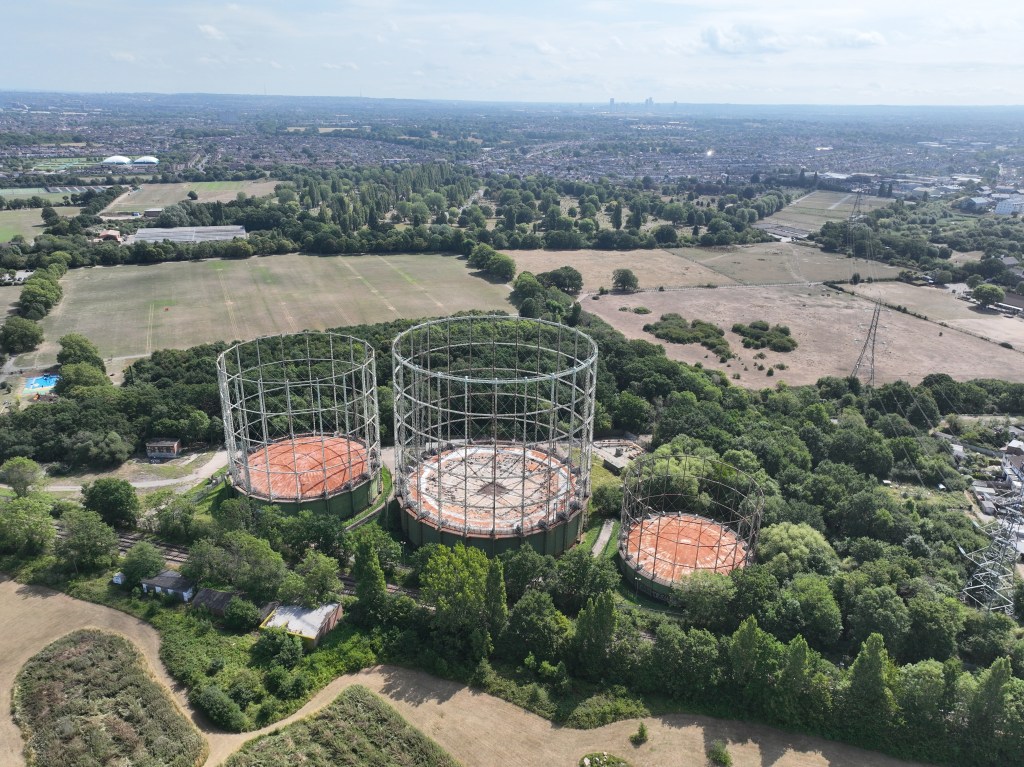
Density of Building / Building Height
The developers initially stated that the buildings may be as high as 18 storeys. This seems far to high. The area is unsuitable for such tall buildings and such density for the following reasons:
1. Poor public transport accessibility
The transport in Motspur Park is not a great as the developers make out. Yes, packed trains to London, but how many people commute to Chessington South? The 131 bus is great. It’s just on the wrong side of Motspur Park. The K5 is limited service.
2. Impact upon open space and protected nature
The gas holders themselves, and the land either side are designated Metropolitan Open Land and Metropolitan Green Chain. The gas holder site is also next to two Sites of Importance for Nature Conservation, more if you include the wider Sparrowfeld area. Sir Joseph Hood Memorial Wood is one of Merton’s designated Local Nature Reserves.
3. Lack of existing tall buildings
The surrounding neighbourhoods in all three Boroughs are characterised by low-rise, residential, suburban homes of 3 storeys or less. Pockets of mid-rise buildings (12m to 21m) on the Hamptons and elsewhere are at least 0.5km away. Average height in the local neighbourhoods is therefore extremely low.
The idea that the gas holders should be replaced by tall buildings is a moot point, and one not necessarily backed up by the evidence. They are currently in a lowered position and ‘porous’, allowing light and wildlife through. They should be compared to the nearby electricity pylons. Who would claim that the presence of a pylon is good reason to build high? However, we admit that it might be acceptable to classify them as mid-rise due to the height of the storage tanks. Building to similar height as the current tanks might be acceptable to some people.
4. Clashing with the prevailing character of the area
It is important to note that the gas holder site is not in New Malden or West Barnes. It is within the historic Parish of Malden, now more commonly known as ‘Old Malden’. The clue is in the name. The development will adversely impact the local character more than the gas holders.
Environmental Concerns
We will expand this section when we know more of the developer’s plans. For the time being we would like to point out the following:
- According to the notice boards at the December consultation, the gas holder site is situated next to two of Sites of Importance for Nature Conservation (SINCs): (1) Sir Joseph Hood Memorial Wood, which is also a designated Local Nature Reserve; (2) The woodland in and around Kingshill Avenue Allotments.
- The latter SINC is officially known as the the Beverley Brook in Kingston, and actually consists of the whole stretch of river and associated habitat.
- This includes/included the access road south of the gas holders, which formed part of the Kingshill Nature Reserve. The gas company took back the land and subsequently degraded the site (see below). We believe the developers should ‘own’ this, and include it in their Biodiversity Net Gain calculations.
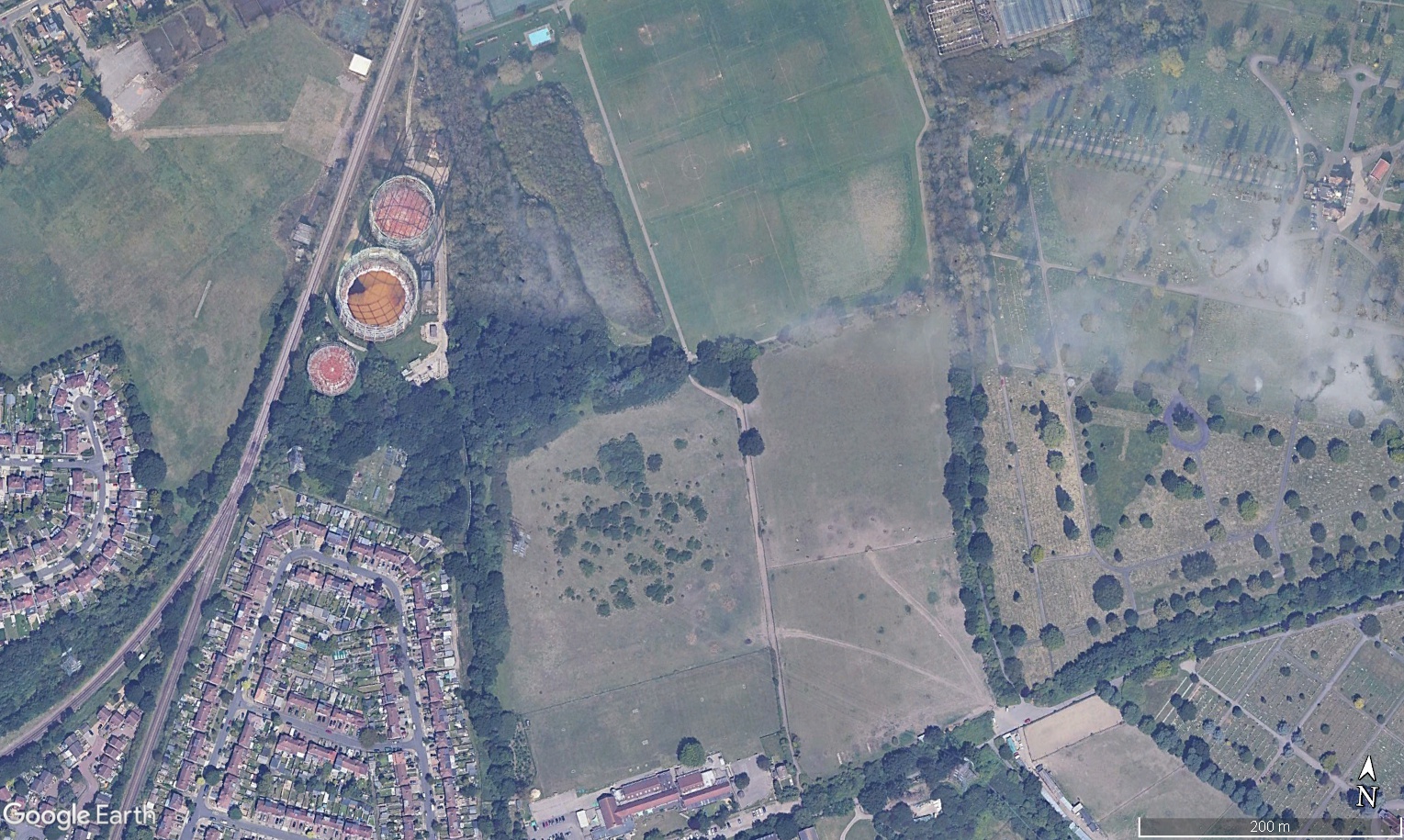

- We believe the developers should be taking into account the wider Sparrowfeld area in their environmental assessment, as it includes more SINCS. This should include the Horse Fields, which are an important resting/feeding ground on the migratory flyway. This is part of the reason why the area is important Metropolitan Green Chain.
- The Former BBC sportsground, west of the gas holders, may be closed off to the public, but we know from Fulham FC’s planning application that this area is important for reptiles and bats. It is likely these are also on the gas holder side of the railway. In fact, we know they are….
- Many Kingshill Avenue residents and allotment holders regularly see slow worms in the area. These are a priority species under Kingston’s own Biodiversity Action Plan.
- We have little faith in Kingston Council on environmental matters. Part of this stems from their previous history with slow worms, but also their their delay in finding a new Biodiversity Officer, at a time when important BNG legislation is being implemented.
- Noise and light pollution. We will hold back on the scientific literature for now, but would like to point out that what annoys humans obviously annoys wildlife. Having buildings and a road so close to two SINCs is of huge concern to us.
- Windows result in collisions, and ultimately death, for many birds. We are concerned about the impact (no pun intended) of building so close to SINCs and the developers idea of “bringing the woodland into the site”. Unless of course they are planning on using engineered solutions.
- The developers are talking about opening up the Beverley Brook. This seems like a good idea, but wood require careful planning and design, as this stretch of the Brook and Green Lane are fly-tipping hotspots. Any stretch of the the Brook that gets opened up would also quickly be filled with litter.
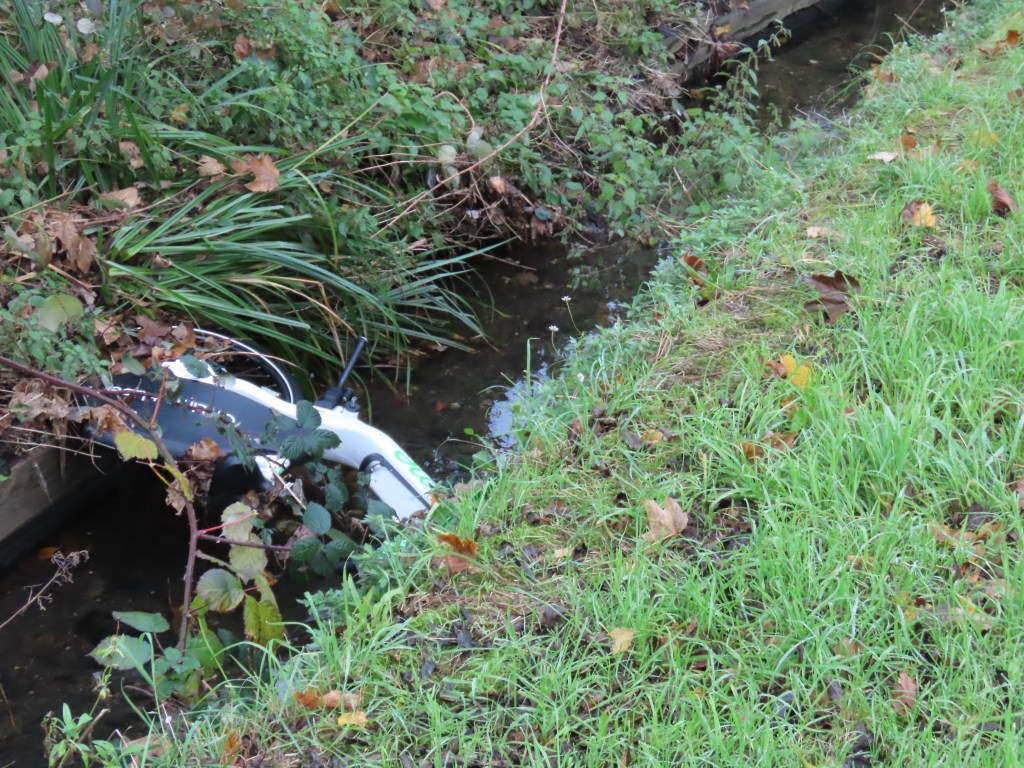
- The same applies to their cycle hire scheme. How long before these bikes end up in the Brook. We reckon less than a week (see below). It’s becoming a problem nationally, so measures need to be taken to mitigate the risk.



 Sparrowfeld Patch