The story of Sparrowfeld’s birds is likely to be very similar to that of southern England, shaped not just by climatic change but changes in human behaviour. However, the archaeology suggests early settlement was located on higher ground, and later the surrounding Domesday villages. It is therefore possible that the patch remained a much wilder, wetter landscape for longer, with marshland species on the valley floor, and woodland species on higher ground.
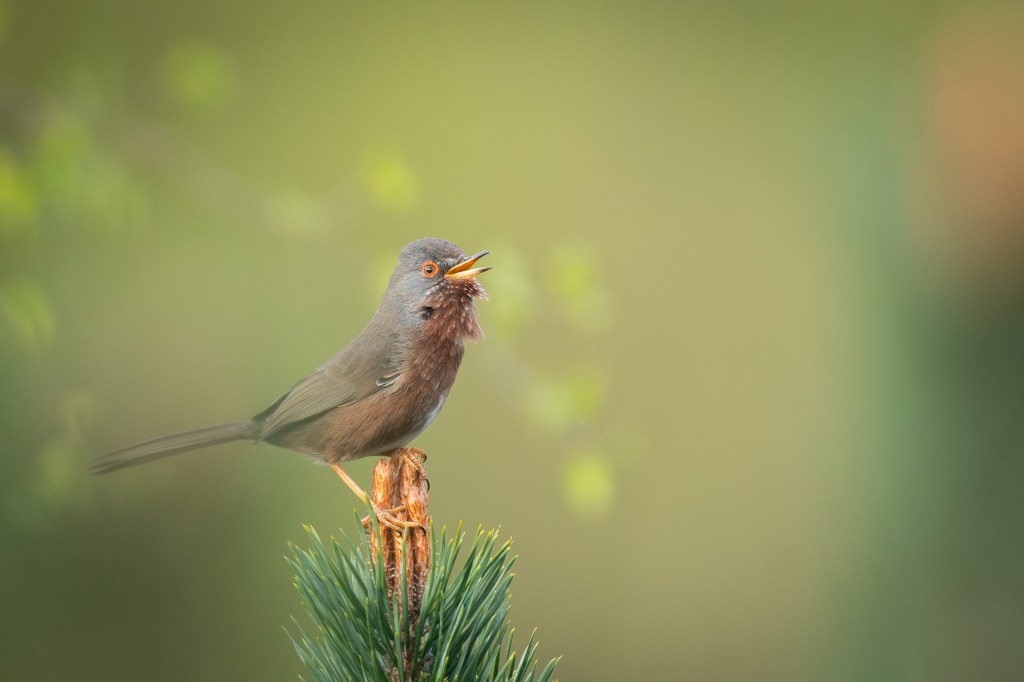
With the area later becoming common land, and increasingly used for firewood and grazing, it is probable that birds of open ground and heathland would have taken over. As villages grew and agriculture expanded, those more associated with farmland would also move in. We know that many early fields had the word ‘furze’ (gorse) in their names, as this was cultivated for firewood or used as hedgerow, so perhaps Dartford Warbler (below) were common, as they favour many of these habitats?
The earliest nearby birds were uncovered by historian Peter Hopkins. Manorial court rolls record the poaching of partridges and pheasants in the Parish of Morden in 1478. There is potentially an earlier record on the basis of someone employed to scare rooks in 1310-1311, but this assumes the servant scared some off.

The next interesting records come from Edward Rayne (1778-1847), who moved to the area in 1822 and would eventually come to own most of West Barnes. His diaries contain a daily account of farming life and the local agricultural economy, but he would make a point of noting the first Cuckoo, Nightingale and Swift of spring.


A gentleman named A.W. Lobb, who lived in Malden from 1907 to 1974, wrote an unpublished memoir available at Kingston History Centre. It appears he was a keen birder, as he opens with a list of birds he knew to have bred in the area. Although it contains many species common today, it also had the following: Yellow Bunting, Chaffinch, Cuckoo, Turtle Dove, Spotted Flycatcher, House Martin, Kingfisher, Tawny Owl, Partridge, Tree Pipit, Plover, Red-backed Shrike, Skylark, Tree Sparrow, Swallow, and Willow Warbler.
Another manuscript, now published by the Merton Historical Society, contains recollections by Bruce Bendell, who talked of Cuckoos, Plovers and Skylarks in West Barnes before the second World War.
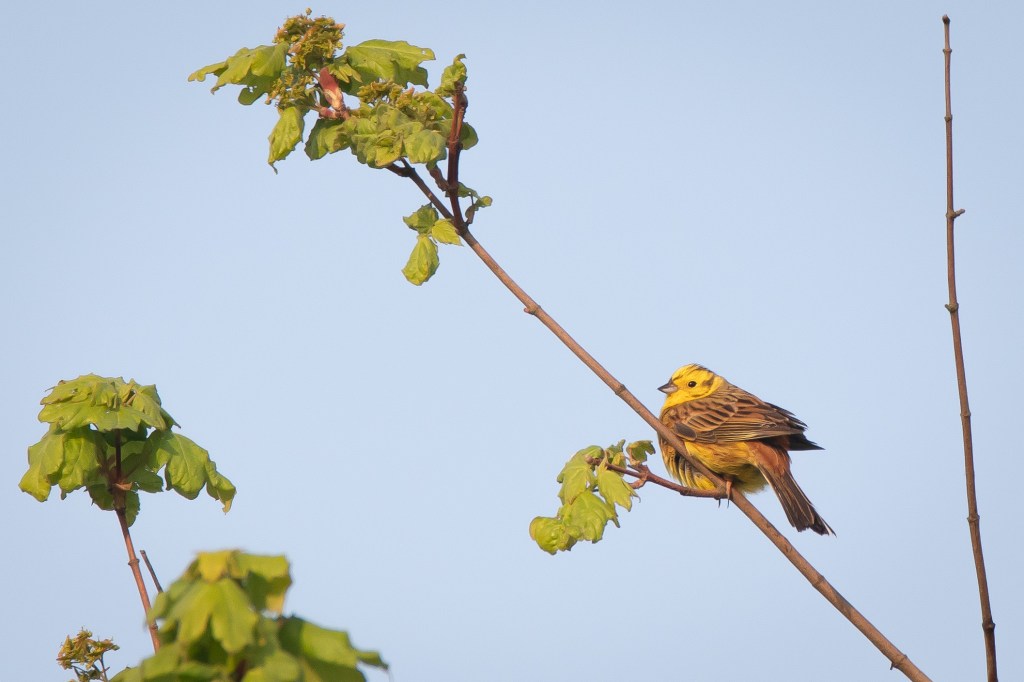
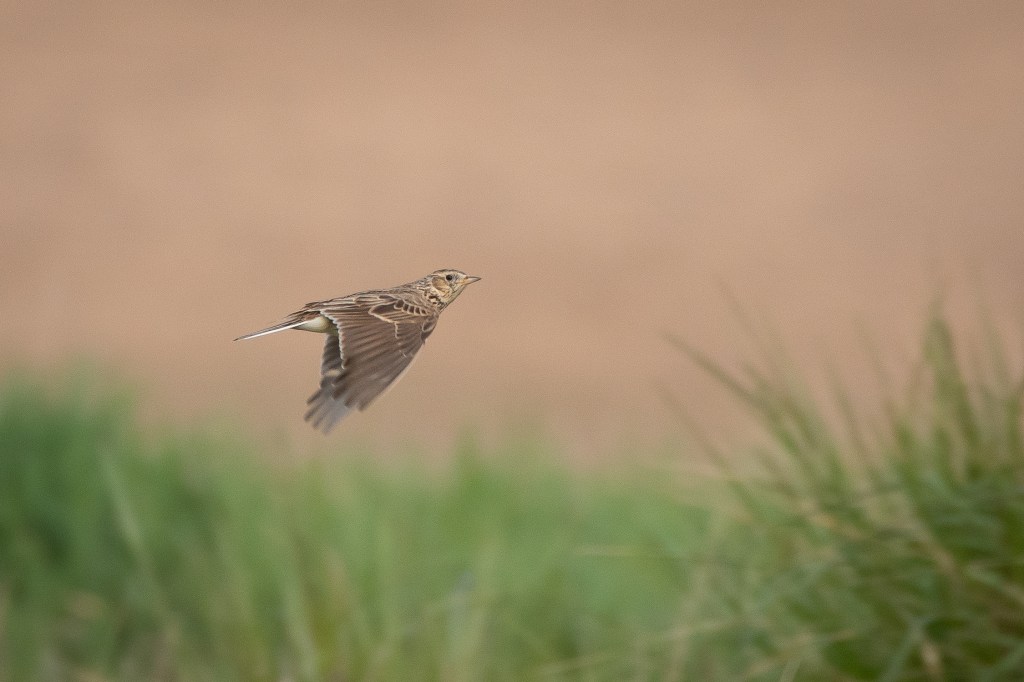

During the conflict , much of Sparrowfeld would be converted to wartime allotments. Many of these would survive until the 1970s, and become some of the best places to spot birds. Between 4th-6th March 1970, according to Bob Smith’s notebook, one allotment site produced 30 Yellow Bunting, 8 Corn Bunting and 6 Reed Bunting, 80 skylark, 10 Meadow Pipit and 30 Linnet.
For much of the twentieth century, Worcester Park Sewage Works would also be a haven for birds that we rarely see on today’s wetlands. In the 1960s and 1970, records show many wader sightings, with large numbers of Redshank and Lapwing.
There were many other species on the patch during this
period. The Gas Holder Wood had a rookery with up to eight nests until 1968. Willow Tit and Lesser Spotted Woodpecker would sometimes be seen along the lane between the Horse Fields and Morden Cemetery. Tree Sparrows nested in Morden Cemetery. Occasionally rarities such as Wryneck and Grasshopper Warbler would be encountered. Passage migrants such as Tree Pipit and Turtle Dove were frequent in September. The decline of these largely followed national trends.
Other species have dropped of since the turn of the century. Mistle Thrush, Chaffinch and Reed Bunting all previously bred. Bullfinch have gone and Whitethroat are falling. On the Mayflower Park wetlands, for unexplained reasons, the number of species has declined. When they were first opened, Teal, Gadwall and Tufted Duck were regular. Today, fewer species are breeding on the pools and with less young.
On the other hand, other species have done well. Many of the lanes used to be lined with grass and flower meadows. Since the 1970s this has been replaced with scrub and trees, increasing the amount of Blackcap. Our mixed habitats also suit species that have increased nationally in recent decades, like Firecrest, Cetti’s Warbler and Little Egret. With a decline in persecution, birds of prey returned. The first Peregrine to be seen on the patch was in 2006, but they are now regular visitors, breeding at Kingston College and Morden Civic Centre, but visiting to the horse fields to hunt. Since 2020, sightings of Red Kite and Buzzard have been increasing.
 Sparrowfeld Patch